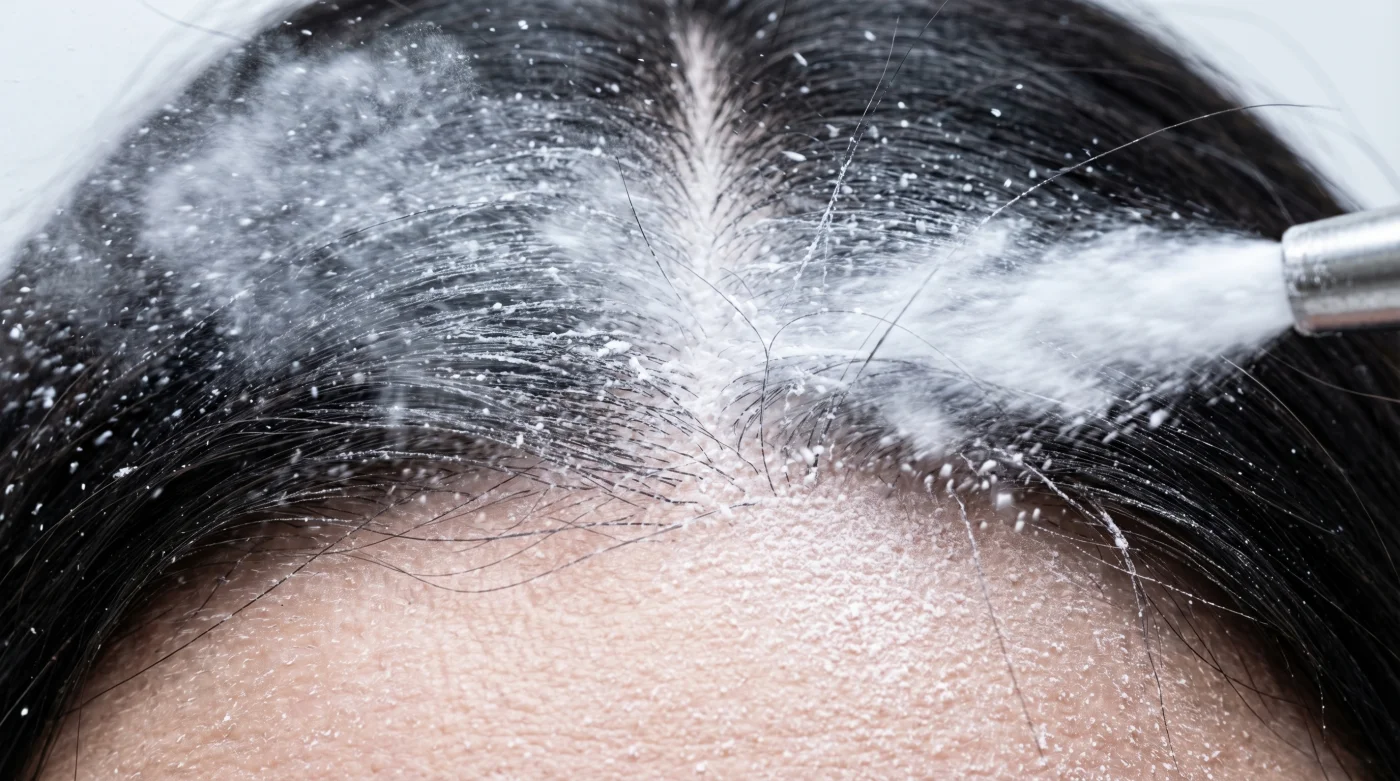
The hiss of the aerosol can is usually followed by a sharp intake of breath. You know the exact sensation: the cold, powdery blast hitting your scalp first thing on a brisk Tuesday morning. A chalky white cloud settles heavily over your roots. You rub furiously, trying to blend that pale ghostliness into hair that already feels heavy, flat, and slightly damp with yesterday’s oil. The result isn’t fresh hair. It’s hair that feels distinctly gritty, smelling intensely of synthetic floral perfume and mild regret.
We treat this basic product like a fire extinguisher. We wait until the grease has fully saturated our roots, grab the cold tin, and hope for a miracle. But look closely at what happens when you blast fine powder into a slick layer of natural sebum. You aren’t cleaning anything. You are mixing a microscopic dough right there on your scalp.
The Sponge Before the Spill
Think of your scalp like a pristine wooden floor. If you spill a cup of olive oil on it, throwing a handful of flour directly over the mess won’t clean the wood. It just creates a sticky, unmanageable paste that requires even more scrubbing to remove.
This is the exact chemistry happening on your head when you spray dry shampoo onto three-day-old hair. The core ingredients in these formulas—usually rice starch, oat flour, or tapioca—are highly absorbent. They are designed to soak up moisture and hold onto it. When you dump them onto already-greasy hair, they immediately clump. The oil weighs the fine powder down, creating that dreaded heavy, dull texture that makes your scalp itch by dinner time.
So, change the sequence entirely. Spray or dust it onto completely clean, dry hair. When you lay down an invisible barrier of starch before the scalp produces its natural oil, those microscopic particles wait. They catch the sebum the exact moment it leaves the follicle. You are installing a preventative shield, not running a salvage operation.
Fiona Davies, a 42-year-old editorial hair stylist working out of Manchester, figured this out out of pure necessity. On multiple-day fashion shoots, washing a model’s hair from scratch every morning costs precious hours. “I started dusting pure arrowroot and rice powder into their roots right after the first blow-dry on day one,” she explains. By day three, the hair still had natural movement and bounce. The powder had silently absorbed the natural scalp oils as they formed, rather than fighting a losing battle against a heavy buildup. Fiona swapped the chemical aerosol panic for a preventative dusting, keeping the hair light and airy for the camera.
Adapting the Barrier Method and Pantry Alternatives
Not all hair responds to starch in the same way. The beauty of this preventative method is that you can ditch the harsh aerosols entirely and look to your kitchen cupboards for better, cleaner ingredients.
If your hair falls flat against your head the moment you step out of the shower, apply your starch barrier immediately after your blow-dry cools. Your application needs slight tweaking here. Part the hair in neat sections and use a very light dusting of pure rice powder—a staple you can find in any supermarket baking aisle. The starch adds immediate grip and prevents the hair from sticking flat to the scalp, preserving your volume for days.
Thick hair hides oil brilliantly, but the roots easily trap heat, creating a sweaty, humid environment against the skin. You don’t necessarily need to apply the product on day one. Instead, brush a little tapioca flour into the roots before you go to bed on the second night. Tapioca is slightly heavier than rice powder. The tossing and turning will work the powder deep into the scalp, quietly absorbing midnight humidity and oil while you sleep.
- Josie Gibson just dyed her hair bright honey blonde
- Charlotte Hawkins just wore this cheap winter coat
- Cosmetic glitter from the Hunter Schafer trend causes permanent corneal scratches.
- Alexa Demie makeup routines are triggering contact dermatitis in teenage skin.
- Castor oil creates an optical illusion without actually stimulating lash growth.
- Dry shampoo application at night completely eliminates morning scalp grease buildup.
- Electrolyte powders fix chronic winter skin flaking faster than heavy creams.
- LED face masks completely fail over thick night cream applications.
- Cream bronzer application requires warm fingertips instead of damp beauty blenders.
- Liquid eyeliner ages hooded eyes instantly with the traditional stretch technique.
The biggest complaint about the preventative method is the risk of a white cast on dark hair. The pantry fix is beautifully simple. Mix two tablespoons of cornflour with one tablespoon of unsweetened cocoa powder. The cocoa darkens the mixture to a soft brown, and the cornflour acts as the absorbent base. You get the exact same oil-blocking benefits without looking like you have powdered a wig.
The Raw Checklist for Clean Application
Getting this right requires a lighter touch and a bit of patience. You are no longer masking a visible problem; you are setting a structural foundation for the week ahead.
Put the aerosol tin away if you can. Switching to a loose powder formula—whether it is a simple DIY blend from your pantry or a high-quality non-aerosol pump—gives you absolute control. You dictate exactly where the starch lands, rather than filling the bathroom with a cloud of butane.
- The Tool: Use a large, clean makeup brush (a fluffy powder brush works best). Dip it lightly into your powder, tap off the excess, and press it directly onto your parting.
- The Wait Time: After application, leave it entirely alone for two full minutes. Let the powder settle and bind to the clean hair strands without interference.
- The Massage: Use the pads of your fingers, never your sharp nails, to gently massage the scalp in circular motions. This distributes the product invisibly across the skin.
- The Brush-Out: Take a natural bristle brush and sweep from the root all the way down to the tip to remove any excess dust resting on the top layer.
There is a specific tactical toolkit required for the best results. Apply your powder in a cool, dry room. A hot, steamy bathroom immediately following a shower will make the starch powder clump upon contact.
Wait exactly fifteen minutes after your heat styling finishes. The hair must be completely cool to the touch. Grab a clean boar-bristle brush and a dedicated fluffy makeup brush to ensure the application is seamless and entirely invisible.
Reclaiming Your Mornings
Shifting this one tiny, almost invisible habit changes the rhythm of your entire week. There is a quiet, profound relief in knowing your styling will actually hold.
You stop waking up dreading the heavy, greasy feeling that usually appears halfway through a busy Wednesday afternoon. You are working in harmony with your body’s natural processes rather than constantly fighting against them in a state of mild panic.
By anticipating the natural oil production and preparing the hair to receive it, you buy yourself precious time. You successfully stretch out your washes without ever sacrificing the satisfying feeling of running your hands through truly clean, weightless hair. It is a small, practical adjustment from the pantry that just makes daily life remarkably easier.
“The secret to weightless hair isn’t washing it more often; it’s preparing the root to handle the oil before it even forms.” — Fiona Davies, Editorial Stylist
| Key Point | Detail | Added Value for the Reader |
|---|---|---|
| Aerosol on Dirty Hair | Mixes starch with existing sebum, creating a heavy paste on the scalp. | Explains the gritty texture and itchy scalp you usually experience by the end of the day. |
| Loose Powder on Clean Hair | Lays down an absorbent barrier that catches oil as it is produced. | Keeps hair light, preserves volume, and prevents grease from ever visibly forming. |
| Pantry Alternatives | Using arrowroot, cornflour, or tapioca instead of commercial butane sprays. | Saves money, removes harsh chemicals, and allows custom colour-matching with cocoa powder. |
Frequently Asked Questions
Will applying powder to clean hair dry out my scalp?
No. Because you are using natural starches like arrowroot or rice powder, it only absorbs excess surface moisture and sebum, leaving the scalp’s natural barrier intact.Can I still use an aerosol dry shampoo for this method?
You can, but aerosols deliver product heavily and contain alcohol. A loose powder applied with a makeup brush offers far better control and is gentler on clean hair.How long will my hair stay clean using the barrier method?
Most people find they can stretch their wash cycle by an additional two to three days without any visible grease or heavy feeling at the roots.Does cocoa powder smell strong when mixed with cornflour?
It leaves a very faint, pleasant chocolate scent initially, which fades completely within an hour of application.What if I exercise heavily every day?
Apply the powder to your roots just before your workout. The starch barrier will absorb the sweat and salt as you train, stopping it from travelling down the hair shaft.