The soft, magnetic click of the attachment finding its seat on the handle feels like a promise. You switch it on, and the motor hums with a refined, acoustic precision that sounds less like a hairdryer and more like a miniature turbine preparing for a gentle ascent. The scent of a cedar-infused heat protectant warms in the air, wrapping your morning routine in an atmosphere of expensive, deliberate care. The weight of the device in your hand is reassuring, a physical reminder of the premium engineering you have brought into your home.
You likely made this considerable financial investment of almost five hundred Pounds Sterling to leave the guilt of singed ends behind. The central appeal was styling with air rather than scorching metal plates, preserving the delicate elasticity of your strands while still achieving that effortless, bouncy shape. It was supposed to be the definitive end of heat damage. You watched the demonstrations, saw the smooth ribbons of hair wrap seemingly by magic, and trusted that the intelligent heat control would act as an uncompromising guardian for your fragile lengths.
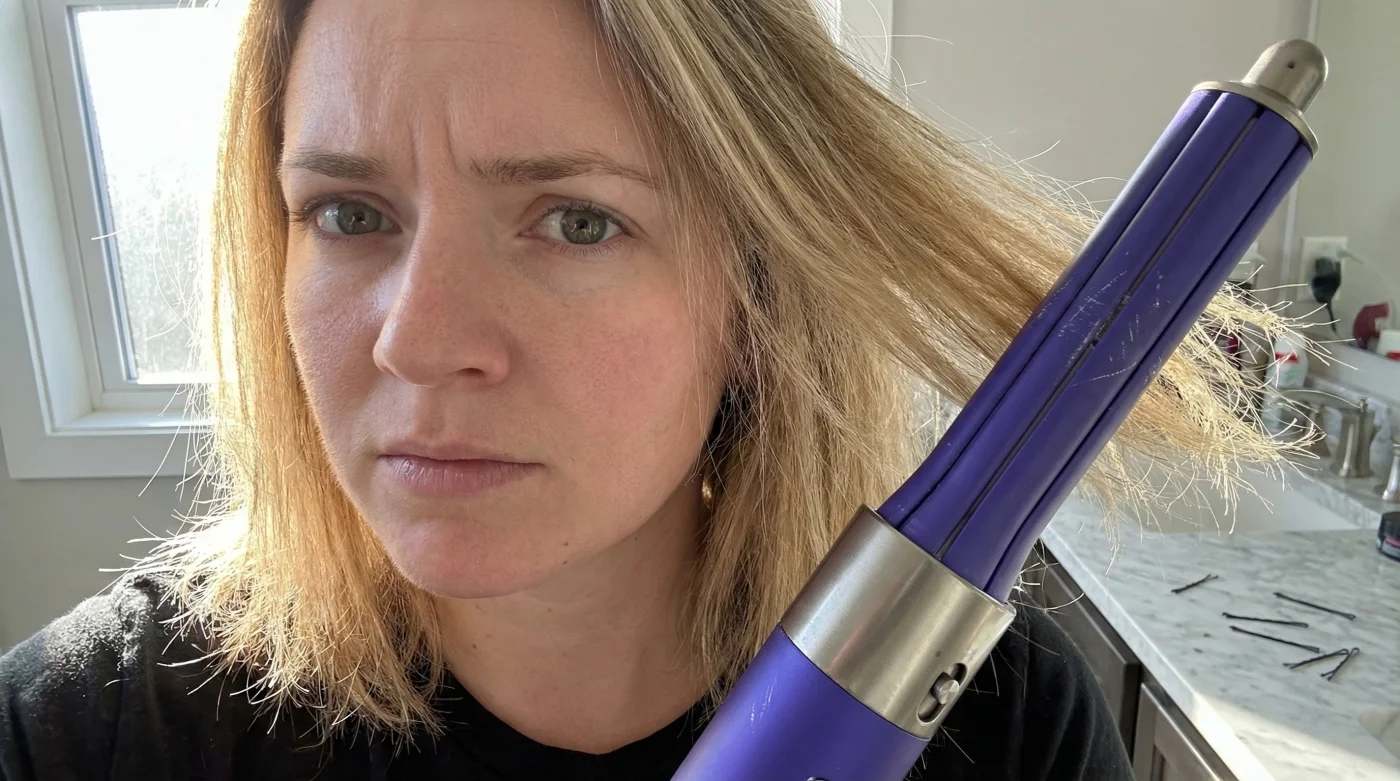
Yet, as the months slip by, a quiet tragedy might be unfolding at your vanity table. You run your fingers through your mid-lengths, expecting the cold slip of spun glass, but instead, you are met with a brittle, raspy texture. The ends look frayed, tapering off into translucent wisps, and the overall lustre seems to have drained away, leaving a dry, straw-like canopy that vehemently resists moisture. It is a slow, creeping degradation that defies the very reason you abandoned your traditional straighteners in the first place.
The culprit is not a faulty machine, nor a failure of the internal temperature gauge, but a fundamental misunderstanding of how high-velocity air interacts with the cellular structure of your hair. You are inadvertently frying the cuticle on a microscopic level, and the routine mistake is perfectly disguised as styling efficiency. It is a habit so common, and so intuitive to our rushed mornings, that it entirely bypasses our better judgement.
The Illusion of Aerodynamics
When you attach the firm smoothing brush and intuitively push the settings to maximum heat and maximum airflow, you are creating a microscopic storm on the surface of your head. Imagine trying to smooth the creases out of a delicate silk scarf by blasting it from a few inches away with a high-pressure hose. The blunt force does not gracefully align the delicate fibres; it aggressively blasts them apart, creating chaos where there should be order. Your hair cuticle is structured remarkably like overlapping roof tiles, designed by nature to lay perfectly flat, trap internal hydration, and reflect incoming light.
By dragging the rigid bristles of the smoothing attachment through soaking wet hair with the airflow cranked to its absolute highest velocity, you are mechanically forcing those protective tiles backwards. This strips the hair of its natural lipid moisture barrier, exposing the incredibly fragile cortex beneath to the harsh open air. What feels like a wonderfully quick route to a sleek, professional finish is actually systematically fracturing your hair’s defence.
Clara, a forty-two-year-old session stylist working out of a quiet, sunlit studio in Marylebone, began noticing a strange and troubling pattern among her most diligent, beauty-conscious clients. Women who had completely and proudly abandoned traditional ceramic straighteners were sitting in her chair with what she quietly diagnosed as ‘shattered cuticles’. After asking one particularly frustrated client to physically demonstrate her morning routine in the salon, Clara realised the problem immediately. The client was using the firm smoothing brush on maximum airflow, pushing the air aggressively upwards against the grain of the hair, relying entirely on sheer heat and wind force rather than the tool’s intended aerodynamic finesse.
Adjusting to Your Natural Threshold
Understanding this sophisticated tool means shifting your entire perspective from merely drying your hair as fast as possible to orchestrating a careful balance of tension, direction, and temperature. Different hair types require vastly different aerodynamic approaches to thrive under the Coanda effect. Treating all hair textures with the exact same blistering wind speed is a guaranteed path to breakage.
For the Fine and Fragile
If your individual strands resemble gossamer, high airflow is your absolute enemy. The sheer velocity of the top setting whips the fine hairs violently against each other, causing microscopic mechanical tearing before the heat even registers. Drop the airflow to the medium or even low setting and rely entirely on the gentle, sweeping tension of the bristles to pull the hair taut. Fine hair needs gentle coaxing, not a hurricane.
For the Thick and Rebellious
You might feel intensely tempted to use maximum heat to bully the sheer volume of your hair into submission, believing that more power equals less frizz. Instead, the secret lies in taking much smaller, more manageable sections. Let the medium heat penetrate the section thoroughly while maintaining an incredibly steady, slow drag down the hair shaft. This deliberate pacing allows the hydrogen bonds to set properly without boiling the internal moisture.
For the Colour-Treated
Heavy lifting with bleach permanently compromises the structural integrity of the hair, leaving the cuticle slightly raised and desperately vulnerable. Using the firm smoothing brush on high heat and high air effectively acts like a mechanical sander on these weakened areas. Turn the heat down to the lowest warm setting, ensure your hair is mostly dry before beginning, and always meticulously follow the direction of growth from root to tip.
Rewiring Your Morning Cadence
Correcting this damaging routine error requires a return to highly mindful, deliberate application. It is entirely about working in silent harmony with the tool’s engineered airflow, rather than stubbornly forcing the machine to mimic a traditional, aggressive salon blow-dry. This delicate, almost imperceptible adjustment will slowly restore your natural lustre.
To truly master the smoothing brush without inflicting permanent damage upon your crown, you must completely adjust your tactile approach. Think of the process like coaxing a delicate fabric into a new shape; the movement should be deliberate, incredibly fluid, and always deeply respectful of the material’s natural grain. Rushing the process only guarantees that you will be spending twice as long trying to mask the resulting frizz with heavy silicone oils later in the day.
Here is your highly tactical toolkit for protective, intelligent styling. Implementing these small, thoughtful physical shifts creates an invisible buffer against mechanical stress:
- Never apply the firm bristles directly to dripping wet hair; always use the rough drying attachment to remove at least eighty percent of the moisture first.
- Select medium airflow and medium heat—the absolute maximum settings are rarely necessary for smoothing and are designed for extreme density.
- Angle the brush slightly downwards at all times, ensuring the concentrated air flows seamlessly from the root down toward the tip, encouraging the cuticle to close.
- Maintain a slow, incredibly consistent glide rather than frantic, repetitive, and harsh brushing motions.
Reclaiming the Ritual
When you finally perfect the delicate balance of physical tension, regulated heat, and directed airflow, the morning routine shifts dramatically from a frantic, slightly aggressive race against the clock to a moment of quiet, satisfying precision. You stop fighting your natural texture with sheer force and begin intelligently working with the fundamental chemistry of your hair. The expensive engineering resting in your hands finally delivers on its initial promise, not through brute force, but through practiced technique.
There is a profound, lasting peace of mind in knowing you are actively protecting the integrity of your hair while still making it look exceptionally beautifully styled. The tragic dullness will gradually fade as the damaged cuticle learns to lay flat once more, eventually reflecting the morning light exactly as nature intended. You are no longer just hurriedly styling for the day; you are curating long-term resilience.
True styling elegance isn’t found in the highest temperature setting, but in the patience to let the airflow gently coax the cuticle closed.
| Key Point | Detail | Added Value for the Reader |
|---|---|---|
| Airflow Direction | Always angle the smoothing brush slightly downwards, following the grain of the hair. | Prevents the cuticle scales from lifting, reducing daily friction and resulting in a mirror-like finish. |
| Moisture Levels | Rough dry hair to eighty percent before using any bristled smoothing attachments. | Minimises the risk of rapidly boiling the water trapped inside the hair shaft, preventing snapping. |
| Setting Selection | Use medium heat and medium airflow for all your daily smoothing requirements. | Significantly extends the life of your colour and maintains elasticity without sacrificing the shape. |
Protecting Your Strands: Frequently Asked Questions
Why does my hair feel drier after using the smoothing brush?
Using maximum heat and airflow on soaking wet hair strips the natural lipid layer, forcing the cuticle scales open rather than efficiently sealing them flat.Do I still need a heat protectant with aerodynamic tools?
Absolutely. Even though the tool meticulously regulates its temperature, sustained warm air still depletes internal moisture. A protective barrier remains non-negotiable.Can the cold shot actually repair existing damage?
It cannot miraculously repair existing physical tears, but using the cold shot sets the hydrogen bonds, locking the style in place and rapidly cooling the cuticle so it lays perfectly flat.Is the firm smoothing brush inherently worse than the soft attachment?
Not inherently, but its rigid bristles offer significantly less give. If you pull too hard while blasting high heat, the mechanical stress on the hair shaft increases exponentially.How long will it take for my hair to visually recover?
With correct, mindful technique, you will notice an immediate improvement in surface shine. True structural recovery, however, requires waiting for healthy hair to grow down over several months.