The sharp click of the ring light floods the room in cold, artificial brightness. You reach for the heavy glass bottle of matte foundation, shaking it briefly before applying thick drops to the back of your hand. The rhythmic tap-tap-tap of the beauty sponge begins, building a flawless, poreless facade. You are recreating that razor-sharp aesthetic you saw scrolling late last night, meticulously baking the under-eyes and jawline with heaps of translucent powder until your face looks as smooth as a filtered photograph.
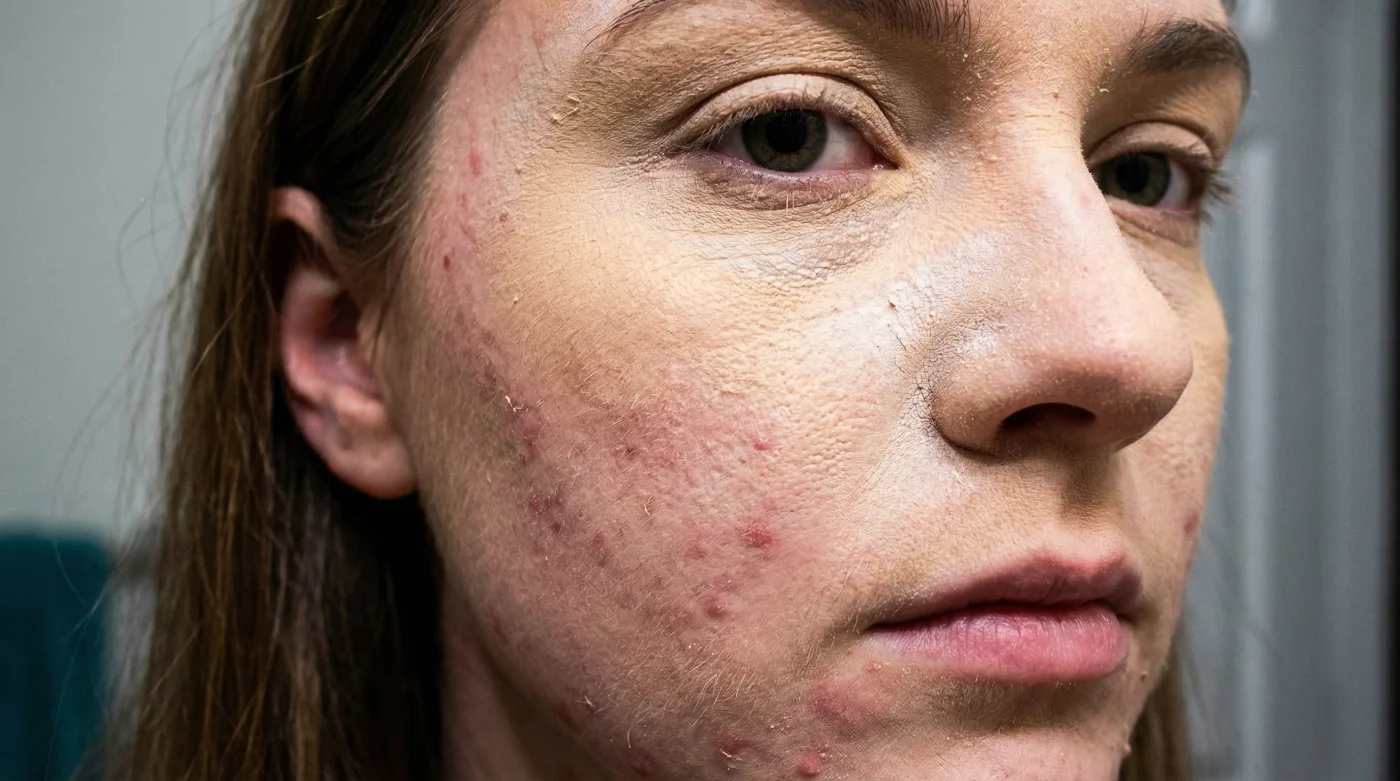
But underneath that velvet finish, something invisible and uncomfortable is brewing. Hours later, as you sit in a stuffy classroom or rush for the bus, the skin feels desperately tight, a slow heat rising around your cheeks. The mask begins to crack, quite literally, as patches of irritation and tiny red bumps surface beneath the heavy layers of powder.
We have been sold a seductive but biologically flawed illusion. The heavy baking, the layers of setting spray, the relentless pursuit of an immovable matte finish—it looks undeniably incredible under the harsh, controlled studio lighting of a television set. Yet, in the damp, shifting reality of a British afternoon, this exact routine is creating a perfect storm for contact dermatitis.
What was meant to be your daily armour has slowly become a physical trap. Clinical dermatologists are now treating a massive wave of sensitised, angry teenage skin, and the culprit is the technique, not your natural complexion. The routines idolised on screen were never meant to be worn to a Tuesday morning lecture.
The Greenhouse Effect on Your Face
Think of your skin not as a blank, inert canvas waiting to be painted, but as a breathing, responsive ecosystem. When you layer heavy, long-wear matte foundation and then ‘bake’ it with loose silica powder, you are effectively laying down a thick sheet of polythene over a damp lawn. It completely traps the body heat, the sweat, and the sebum that your youthful skin naturally produces in abundance.
That famous celebrity routine is designed for an environment that simply does not exist in your daily life. Under the intense heat of film lighting, makeup must be entirely bulletproof. But on an average day, that same impenetrable barrier turns your highly active pores into an incubator for bacteria. The flaw isn’t your natural oil production; the flaw is trying to cement it shut.
Dr. Araba Mensah, a 42-year-old consultant dermatologist based in a busy London clinic, knows this story all too well. Over the past eighteen months, she has watched a steady stream of sixteen-to-nineteen-year-olds sit in her chair, deeply distressed by sudden, angry rashes across their cheeks and jawlines. They weren’t experiencing standard hormonal teenage breakouts; they were presenting with acute contact dermatitis. Dr. Mensah realised that the aggressive layering of heavy matte foundations, driven by a desire to emulate television aesthetics, was fundamentally altering the acid mantle of youthful skin, suffocating the pores under a literal layer of cosmetic silt.
Adjustment Layers for Your Daily Reality
How do you adapt this clinical knowledge to your actual morning routine? You do not have to abandon coverage entirely, but you must change the architecture of how you build it. It is about working in harmony with your skin’s natural rhythm.
Depending on your specific needs, the approach requires a slight, mindful calibration. Stripping back the routine is about finding the breathing room between achieving confidence and maintaining comfort.
- Castor oil creates an optical illusion without actually stimulating lash growth.
- Dry shampoo application at night completely eliminates morning scalp grease buildup.
- Electrolyte powders fix chronic winter skin flaking faster than heavy creams.
- LED face masks completely fail over thick night cream applications.
- Cream bronzer application requires warm fingertips instead of damp beauty blenders.
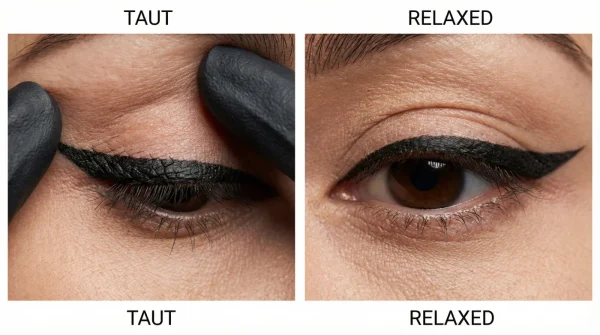
- Liquid eyeliner ages hooded eyes instantly with the traditional stretch technique.
- Apple cider vinegar destroys your scalp microbiome without this dilution ratio.
- Micellar water residue is causing stubborn cystic acne in women over forty.
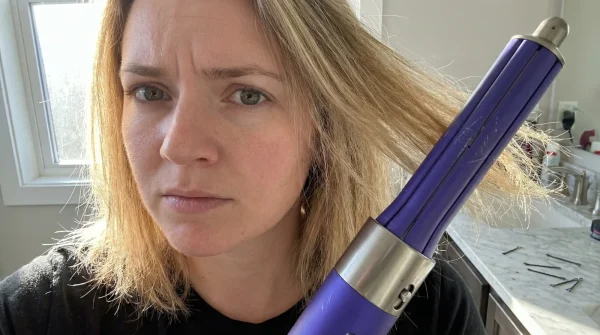
- Dyson Airwrap owners are causing permanent heat damage using this attachment.
- SPF50 moisturisers provide half the stated protection after two hours outdoors.
For the Oil-Prone Realist
Drop the heavy baking process entirely. Instead of locking your entire face in powder, use a sheer skin tint to unify your overall tone. Spot-conceal with a matte formula only where absolutely necessary, like over an active blemish. Let the rest of the face breathe, allowing your natural oils to act as a protective barrier rather than an enemy to be destroyed.
For the Texture-Conscious
If you have unevenness or scarring, painting a heavy matte layer over the top often acts like a magnifying glass, highlighting the very unevenness you wish to hide. Move to a satin finish foundation. Use a damp sponge to sheer it out, leaving the natural high points of your face—the tops of the cheekbones and the bridge of the nose—entirely bare to catch the light naturally.
For the Long-Wear Dependent
If you genuinely need your makeup to last a twelve-hour shift or a long day of travel, swap the suffocating liquid matte foundation for a gripping, hydrating primer and a light dusting of mineral powder. The mineral powder will absorb excess oil throughout the day without creating that restrictive polythene seal over your pores.
Mindful Application: Rebuilding the Routine
This is where you reclaim your mornings and your skin’s health. Stripping back the routine isn’t about compromising on the finish; it is about applying your products with deliberate, minimalist intention.
Focus only on what the skin actually needs in that specific moment. By treating makeup as an enhancement rather than a plaster cast, the skin begins to heal almost immediately.
- Cleanse with a gentle, non-stripping wash, leaving the skin slightly damp to the touch.
- Press your moisturiser in with the flats of your fingers, letting the natural heat of your hands melt it into the epidermis.
- Wait three full minutes. The skin should feel plump and hydrated, but not slippery.
- Apply your sheer coverage only to the centre of the face—around the nose and chin—blending outwards so the perimeter remains completely bare.
Your Tactical Toolkit:
- Temperature: Keep your liquid formulas at room temperature; cold products will sit on top of the skin rather than blending seamlessly into your warm face.
- Timing: The three-minute pause between your skincare and your makeup application is non-negotiable for preventing product pilling.
- Tools: Use your ring finger for applying concealer, using the lightest possible pressure, as if you are gently tapping a bruised peach.
Making Peace with the Mirror
Releasing yourself from the tight grip of the heavy matte aesthetic does far more than just clear up a stubborn bout of contact dermatitis. It fundamentally changes how you look at yourself in the mirror every morning.
You are no longer chasing an impossible, airbrushed standard designed for high-definition television screens. You are living in reality, where human skin moves, stretches, breathes, and occasionally flushes.
The celebrity routine you admired was never meant to be a daily uniform for navigating the real world. By letting your skin act like skin—with its natural glow, its subtle imperfections, and its vital, protective oils—you aren’t just preventing a medical rash. You are stepping out of the greenhouse, dropping the heavy mask, and finally feeling the fresh air on your face.
“Skin is a living, breathing organ, not a plasterboard wall; when you stop trying to spackle it into submission, it usually stops fighting back.” — Dr. Araba Mensah
| Key Point | Detail | Added Value for the Reader |
|---|---|---|
| The Baking Ban | Heavy powder over liquid foundation traps heat and sweat. | Prevents the micro-environment that breeds contact dermatitis bacteria. |
| Targeted Concealing | Applying coverage only to the centre of the face and active blemishes. | Allows the majority of your pores to breathe while maintaining an even complexion. |
| The Three-Minute Rule | Waiting between skincare application and makeup. | Ensures your protective skin barrier is set, reducing chemical irritation from makeup. |
Frequently Asked Questions
Is all matte foundation bad for teenage skin? No, but wearing heavy, full-coverage matte formulas daily creates an occlusive barrier. Lighter, oil-free formulas used sparingly are much safer.
How do I know if I have contact dermatitis or just acne? Contact dermatitis often presents as a tight, itchy, red rash with tiny bumps, usually appearing exactly where you apply heavy makeup or powder, whereas acne includes blackheads and deeper cysts.
Can I still use setting powder? Yes, but use a light, finely milled powder only on the areas that get excessively oily, rather than ‘baking’ thick layers under the eyes and jaw.
Will my skin heal if I stop baking? Usually, yes. Once you remove the suffocating barrier, the skin’s acid mantle can rebalance itself within a few weeks of gentle cleansing and moisturising.
How do I get my makeup to stay without baking? Focus on skin preparation. A good gripping primer and pressing your makeup in with a damp sponge will ensure longevity without suffocating the pores.